 how-to
How to Plan Bridal Shower Catering in San Diego
Last Updated: November 1, 2026
Quick Summary
Bridal shower catering in San Diego starts with locking down your guest count and shower format before tasting any food, since a seated brunch for 20 needs plated service while a drop-in afternoon gathering for 40 needs grazing stations. Book your caterer as soon as the date and guest count are set, ideally six or more weeks out.
- Collect dietary restrictions at RSVP and give your caterer the list before the menu is locked.
- Taste and sign the contract four to five weeks before the shower date.
- Confirm final headcount and menu with the caterer one week out.
- Ask for the all-in per-person price covering food, staffing, service charge, tax, and gratuity.
- Staffed buffet is the most common choice for showers of 25 to 50 guests.
Table of Contents
- Start With Guest Count and Shower Format
- Bridal Shower Menu Ideas That Fit the Time of Day
- Bridal Shower Catering for Dietary Restrictions
- Bridal Shower Catering Timeline: When to Book and Confirm
- Bridal Shower Catering Questions to Ask Before You Sign
- Budget Planning for Bridal Shower Catering
- Request a Quote From Gather Event Collective
- Frequently Asked Questions
Start With Guest Count and Shower Format
Bridal shower catering in San Diego works best when you lock down two numbers before you taste a single appetizer: how many guests you're feeding and what kind of shower you're hosting. Get those wrong and every menu decision downstream gets harder.
Here's the part most hosts skip. The format of your shower, not the food, sets the entire catering plan. A seated brunch for 20 needs plated service. A drop-in afternoon gathering for 40 needs stations that hold up for three hours.
Hosts who nail the guest count and format early tend to save themselves weeks of second-guessing. If you're hosting at home and want a deeper planning walkthrough, our guide on hosting a bridal shower at home covers the checklist, timeline, and budget basics.
Step 1: Set a firm guest count. Add a cushion for plus-ones and last-minute RSVPs. An inaccurate headcount is an easy way to run short.
Step 2: Choose your format.
Brunch, Lunch, or Afternoon Grazing
The time of day decides your menu more than anything else. Brunch showers lean on pastries, egg dishes, and coffee. Lunch showers want heartier fare: salads, sandwiches, a warm entrée. Afternoon showers, usually the casual ones, thrive on grazing food guests can pick at while mingling.
| Format | Typical Start Time | Food Style | Best For |
|---|---|---|---|
| Brunch | Late morning | Pastries, fruit, egg dishes | Sit-down, intimate groups |
| Lunch | Midday | Salads, sandwiches, entrée | Full-service, seated guests |
| Afternoon grazing | Early afternoon | Charcuterie, light bites | Mingling, drop-in guests |
Pick the format that matches your guest count and venue. A backyard shower for 15 can go full brunch. A 40-person afternoon event is better served by grazing stations.
Bridal Shower Menu Ideas That Fit the Time of Day
Match the menu to the clock and you'll avoid the classic mistake of serving heavy food at a mid-afternoon shower when guests already ate lunch. Light, beautiful, and easy to graze wins most afternoon events.
Pastries, Fruit, Salads, and Tea Sandwiches
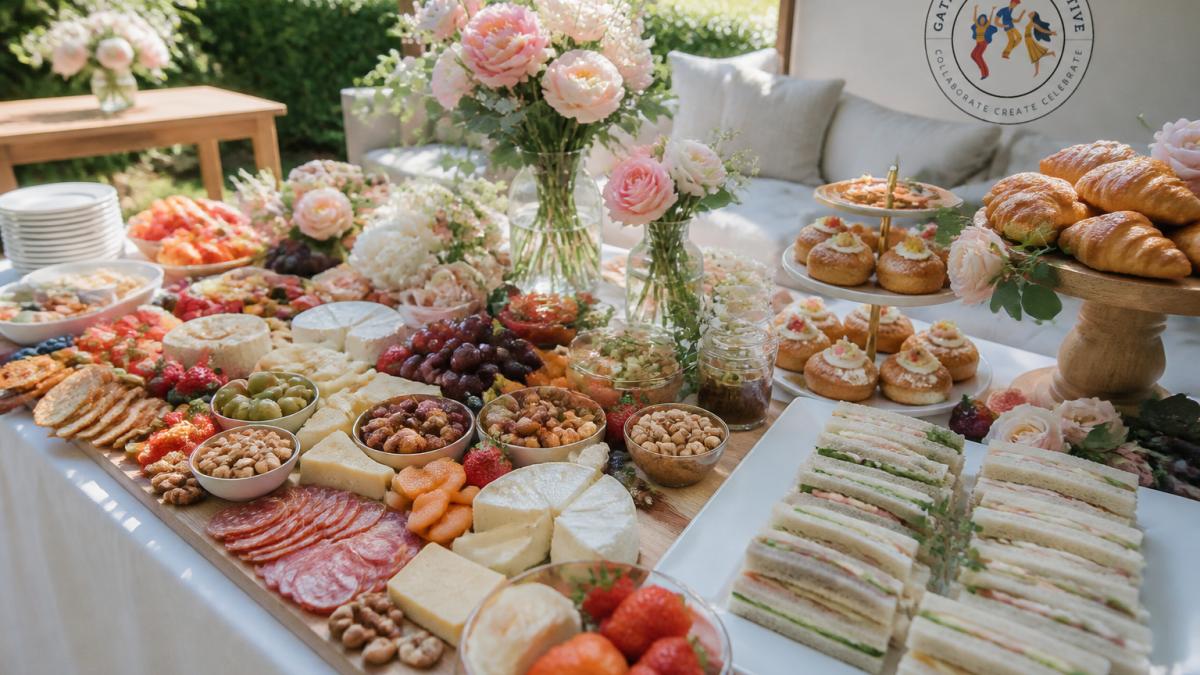
These are the backbone of a classic shower spread. Think mini quiches, scones, a fresh fruit display, a crisp salad, and finger sandwiches with the crusts cut off. They photograph well, travel well, and suit almost any guest list.
Grazing Tables and Charcuterie Boards
A grazing table can serve as a centerpiece. Charcuterie boards, cheese, crackers, olives, and seasonal produce let guests build their own plates and keep the food looking abundant for hours. For hosts who want a showpiece station, our mobile event cart service can be set up as a charcuterie bar, dessert station, or beverage cart. It's a smart way to add a food moment without building a full buffet.
Bridal Shower Catering for Dietary Restrictions
Dietary needs are not an afterthought, they're a planning input. Collect restrictions at RSVP and hand your caterer the list before the menu is locked. That single step prevents most day-of surprises.
Ask guests to flag allergies, gluten-free needs, vegetarian and vegan preferences, and any religious or cultural food requirements on the RSVP.
Watch out: a generic "we can accommodate" answer isn't enough. Get specifics on which dishes will be safe and how they'll be labeled at the table.
Bridal Shower Catering Timeline: When to Book and Confirm
Book your caterer as soon as the date and guest count are set. The timeline below keeps you from scrambling.
- 6+ weeks out: Set date, guest count, and budget. Reach out to caterers.
- 4-5 weeks out: Taste, choose menu, sign the contract.
- 2-3 weeks out: Send invitations with RSVP and dietary questions.
- 1 week out: Confirm final headcount and menu with the caterer.
- 2-3 days out: Confirm delivery, setup time, and day-of contact.
A common mistake is waiting too long to book. Lock the date early, then adjust the count within the contract's window.
Bridal Shower Catering Questions to Ask Before You Sign
Most caterer question lists stop at "what's included." The useful version turns answers into a side-by-side comparison and a contract you can actually enforce. Ask the same questions of every caterer, write the answers down in the same order, and score them before you decide.
The comparison checklist
Build a simple table with one column per caterer and these rows. Score each 1-3 so the decision is not just a gut feeling.
- All-in per-person price: food, staffing, service charge, tax, and gratuity combined.
- Minimum spend or guest minimum: does the shower clear it, and what happens if the count drops?
- Staffing ratio: how many servers and bartenders per guest, and is a captain included?
- Setup and cleanup: who sets the buffet, who clears plates, who removes trash, and who breaks down.
- Final headcount deadline: how many days out, and can the count go down as well as up?
- Dietary and allergen handling: how dishes are prepared, labeled, and kept separate.
- Menu customization: what can change, what is fixed, and whether changes affect price.
- Tasting policy: is a tasting included, and is it credited toward the contract?
- Cancellation and change terms: deadlines, penalties, and reschedule options.
- Day-of contact: one named person who owns problems.
- Insurance and licensing: current liability coverage and food-service permits.
- Payment schedule: deposit amount and due dates for the balance.
Contract terms to read closely
- Deposit and balance: how much is due at signing and when the remainder is due.
- Guarantee clause: the final-count deadline and whether you pay for the guaranteed number even if fewer guests attend.
- Service-charge definition: whether it is a true service charge or an administrative fee, and whether gratuity is separate.
- Cancellation and force majeure: what happens if the date changes or the event is called off.
- Liability and insurance: who covers what if something goes wrong on site.
- Menu-change cutoff: the date after which the menu is locked.
Red flags
- A quote with no service-charge, tax, or gratuity line.
- "We can accommodate" with no specifics on which dishes are safe or how they are labeled.
- No named day-of contact.
- A guarantee clause that locks the count weeks before the event with no downward adjustment.
- No written tasting or menu-change policy.
Get every answer in writing and attach the comparison table to the signed contract.
Budget Planning for Bridal Shower Catering
The gap is bridal-shower-specific budget mechanics: what a per-person figure actually buys, which line items sit outside it, and how to build a total you can defend to whoever is splitting the bill.
Start with the total you can spend, then work backward. Divide your catering budget by guest count to get a per-person target, then account for the non-food costs that are easy to forget, such as service, tax, and gratuity.
What the per-person price usually includes, and what it doesn't
Ask every caterer to break the quote into these buckets so you can compare apples to apples:
- Food and beverage: the menu itself, plus coffee, tea, and any bar service.
- Staffing: servers, bartenders, and on-site captains. Drop-off service typically has none; full-service does.
- Setup and cleanup: table setting, buffet setup, trash removal, and breakdown.
- Service charge: a percentage added by the caterer, separate from gratuity. Confirm whether it is a true service charge or a disguised admin fee.
- Sales tax: applies to taxable food and service items and varies by jurisdiction.
- Gratuity: often a separate line, sometimes discretionary, sometimes built in.
- Delivery and travel: distance-based fees for off-site events.
Build a sample total
Use this worksheet structure to turn a per-person target into a real number. Plug in your own figures rather than relying on a generic average:
- Guest count (including your 10% cushion).
- Food and beverage per person × guest count.
- Staffing, flat or per-server, based on guest count and service style.
- Service charge, apply the caterer's stated percentage to the food and staffing subtotal.
- Sales tax, apply the local rate to taxable items.
- Gratuity, apply the stated percentage.
- Delivery or travel fee, flat or distance-based.
Add those seven lines and you have an all-in total. Divide by guest count for your true per-person cost, which is the number to compare across vendors.
Service level drives the range more than the menu
- Drop-off or pickup: food only, self-serve. Lowest all-in cost because there is no labor.
- Staffed buffet: servers, setup, and cleanup. Mid-range, and the most common choice for showers in the 25-50 guest range.
- Plated or stationed full-service: captain, plated courses or attended stations, bar. Highest, and usually reserved for seated brunches or larger guest lists.
Staffing and service charges can scale with guest count, so a per-person figure may need re-quoting as the guest list changes.
Where hosts overspend
- Adding a bar without pricing it per person.
- Ordering for the invited count instead of the confirmed count.
- Skipping the service-charge and gratuity lines when setting the budget.
- Choosing plated service for a mingling format where stations would cost less and fit better.
If you are weighing professional catering against doing it yourself, our breakdown on whether catering for private parties is worth the cost covers the trade-offs. For a real number on your event, request a quote from Gather Event Collective, since pricing depends on guest count, menu, service level, and date.
Request a Quote From Gather Event Collective
That's the whole reason
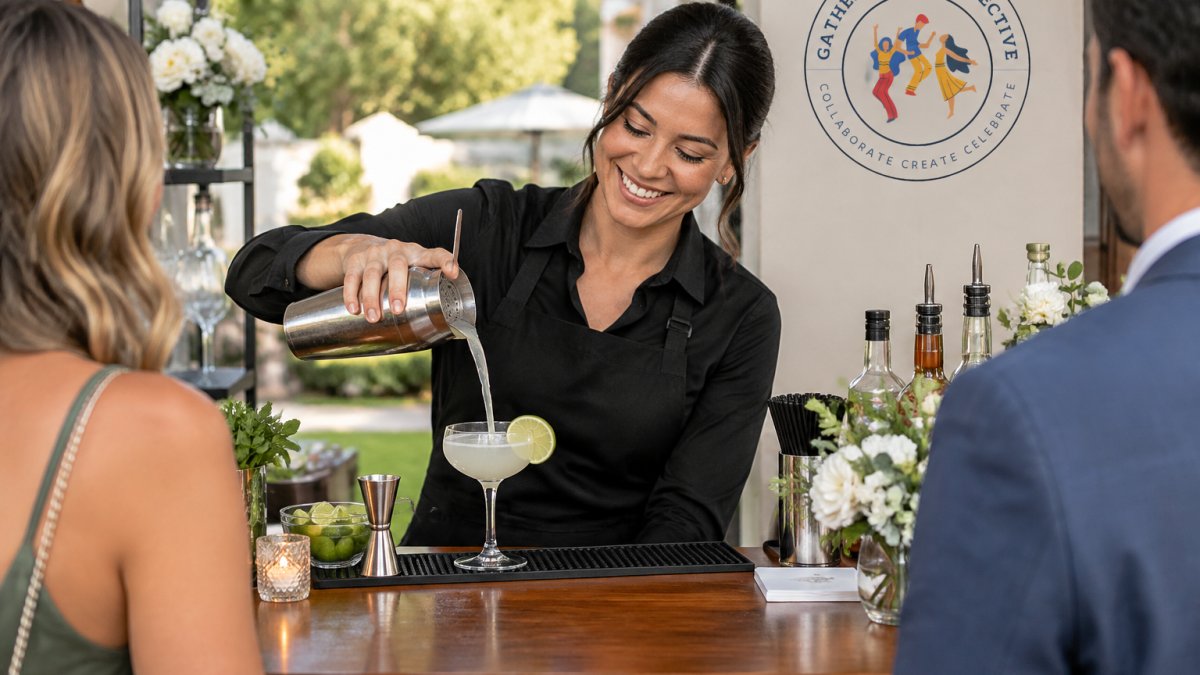
We bring more than 20 years of catering and hospitality experience to every event, and we specialize in intimate gatherings and last-minute celebrations across San Diego and North County. You can see our full San Diego Bridal Shower Planning service to understand exactly what's included, and if your celebration calls for drinks, our Event Bar Service in San Diego rounds out the same one-team setup.
Ready to stop planning and start celebrating? Tell us about your event and we'll handle the details.
Frequently Asked Questions
What food should you serve at a bridal shower?
The food should match the shower's time of day. Morning showers work well with pastries, fresh fruit, yogurt parfaits, and breakfast items. Afternoon showers suit tea sandwiches, salads, vegetable platters, and a grazing table or charcuterie board. For a fuller meal, choose buffet service or standard full-service catering with a hot entree.
How much food should you plan per guest for a bridal shower?
Quantities depend on the format and guest count, so confirm portion planning with your caterer. Confirm quantities with your caterer based on your final guest count.
When should you book a caterer for a bridal shower?
Booking further ahead is generally helpful for popular dates. If your event is on a short timeline, contact Gather Event Collective directly to ask about availability. Have your guest count, date, and venue address ready before you call so the caterer can confirm availability fast.
How do you accommodate dietary restrictions at a bridal shower?
Ask guests about allergies and dietary needs on the RSVP, then share the list with your caterer at least two weeks before the event. Ask your caterer which gluten-free, dairy-free, nut-free, vegetarian, and vegan options are available, and confirm cross-contact practices in writing. For severe allergies, ask the caterer to walk you through their kitchen and service plan.
The hardest part of shower planning isn't the food, it's coordinating all the moving pieces while life keeps moving. Gather Event Collective removes that burden with all-inclusive planning, curated catering, bar service, and staffing built for intimate San Diego and North County gatherings. Get started with Gather Event Collective and hand off the logistics so you can focus on the bride.