 listicle
Is Catering for Private Parties Worth the Cost?
Last Updated: October 25, 2026
Quick Summary
Catering for private parties is usually worth the cost, but only if you buy the right service level for your party. Hosts who overbuy pay for staff they never needed, while hosts who underbuy spend the whole night in the kitchen.
- Drop-off catering suits casual gatherings under 25 guests, with no staff staying on site.
- Full-service catering covers menu planning, sourcing, cooking, transport, setup, service staff, and cleanup.
- For a 50-guest buffet, plan 55 entrée servings and 100 side servings.
- A full-size chafing pan holds roughly 50-60 servings of a side dish.
- Confirm the final guest count and allergy requirements in writing two weeks out.
Table of Contents
- What Private Party Catering Actually Includes
- Full-Service Catering for Private Events: What You Get
- Private Event Catering Menu Ideas That Work for Any Crowd
- Catering for a 50-Person Party: Portions, Pans, and Planning
- How to Choose a Caterer for a Private Party
- What Drives the Price of Private Party Catering
- Dietary Restrictions, Allergens, and Custom Menus
- Request a Quote for Your Private Party
- Frequently Asked Questions
What Private Party Catering Actually Includes
Catering for private parties is the professional preparation, delivery, and service of food and drink for a hosted celebration, from a backyard birthday to a corporate reception.
Here is the question worth answering first: is it worth the cost? Usually, yes, but only if you buy the right service level for your party.
Below, we break down what each tier includes, how portions work for a 50-person party, and what actually drives the bill.
Drop-Off vs. Full-Service vs. Chef-Attended
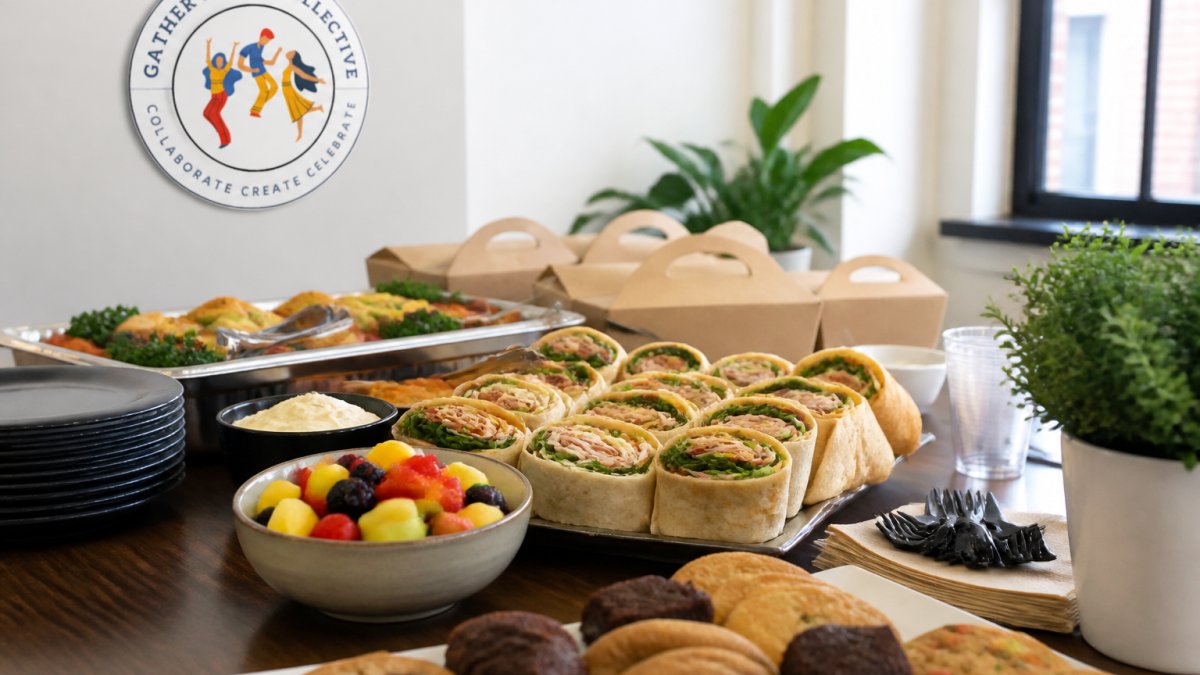
Drop-off catering is food delivered ready to serve, usually in pans, with no staff staying on site. You handle setup, serving, and cleanup.
Full-service catering includes staff who set up, serve, replenish, and clean. You host; they run the food.
Chef-attended service sits between the two: a chef or attendant manages a specific station, like a carving board or pasta bar, while the rest of the meal is self-serve.
| Service Level | Staff On Site | Setup & Cleanup | Best For |
|---|---|---|---|
| Drop-off | No | You handle it | Casual gatherings under 25 guests |
| Chef-attended station | 1-2 for the station | Partial | Cocktail hours and interactive menus |
| Full-service | Full team | Included | Seated dinners and milestone events |
Full-Service Catering for Private Events: What You Get
Full-service catering for private events covers the entire food operation: menu planning, sourcing, cooking, transport, on-site setup, service staff, and cleanup.

In practice, that means a captain who runs the timeline, servers who pass bites and clear plates, and a kitchen plan that keeps hot food hot.
The trade-off is cost and lead time. Full-service needs more advance notice than drop-off, because staffing has to be locked in.
Private Event Catering Menu Ideas That Work for Any Crowd
Private event catering menu ideas should match how guests will move through the party, not just what sounds good on paper. A seated dinner needs plated courses; a cocktail reception needs food that works standing up.
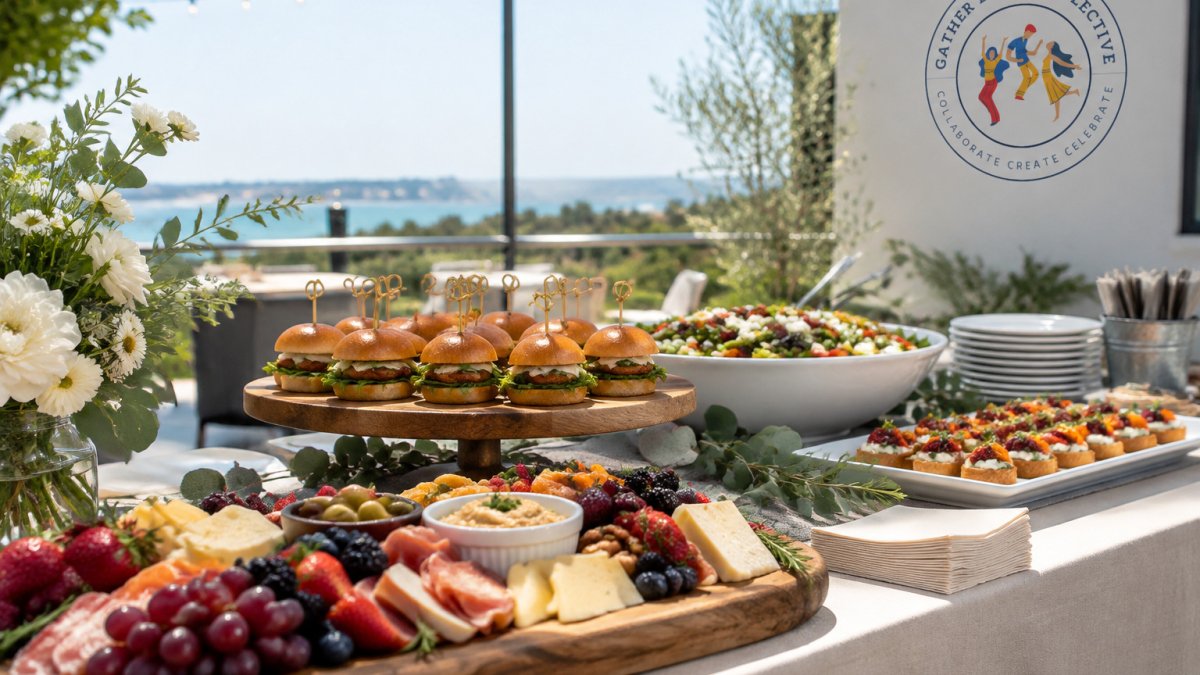
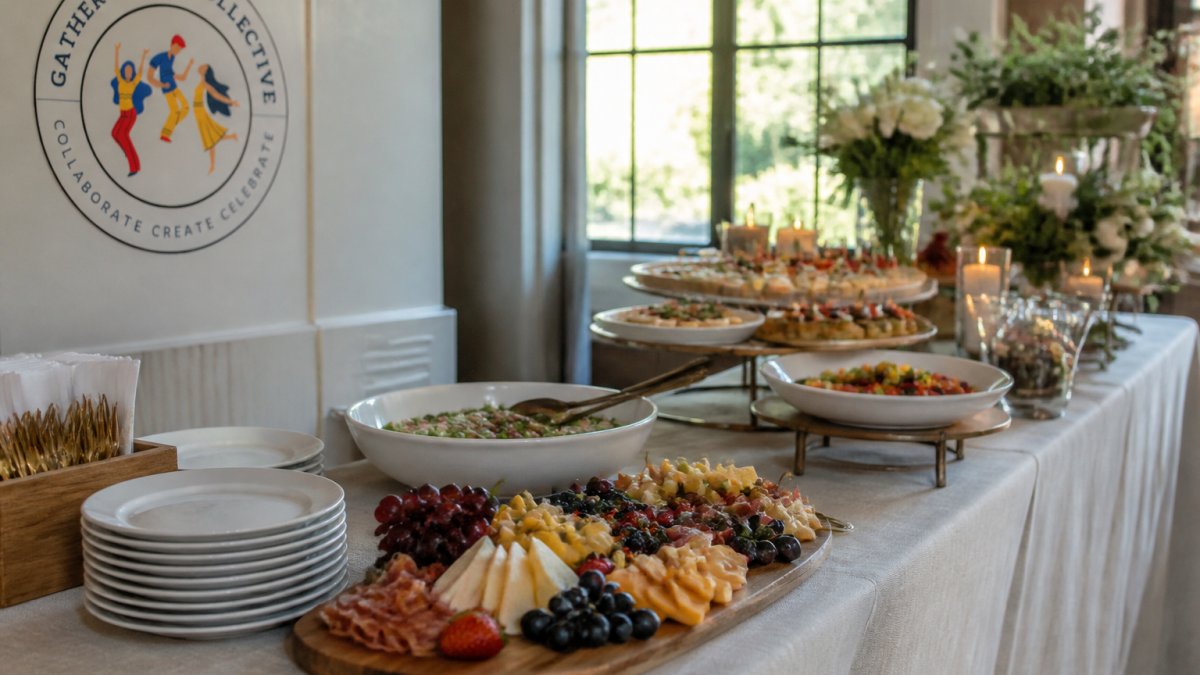
If you want to see styled options before you commit, our grazing table and charcuterie catering pairs seasonal cheeses, cured meats, fruit, and artisan breads into a centerpiece guests gravitate toward. For a broader starting point, browse our buffet and cocktail party ideas to spark a menu direction.
Passed Bites, Stations, and Family-Style Feasts
- Passed bites: butler-style service that keeps guests mingling. Best for cocktail hours.
- Chef-attended stations: taco bars, carving boards, or pasta stations. Interactive and filling.
- Family-style feasts: large platters passed around shared tables. Warm and social.
Catering for a 50-Person Party: Portions, Pans, and Planning
Catering for a 50-person party is mostly a math problem wrapped in a hospitality problem. Get the quantities right and the party runs itself; get them wrong and you either run out by 8 p.m. or throw away half a pan. The numbers below are the working rules most caterers use, scaled so you can adjust them to your own guest list.
Start With the Format, Not the Headcount
Portion math changes with how food is served. Use these as starting points for a 50-guest party:
- Cocktail hour only (no meal): plan 4-6 passed bites per guest, which is 200-300 pieces total. If the reception runs longer than two hours, push toward the higher end.
- Buffet meal: plan one generous entrée portion per guest plus a 10 percent buffer, so 55 entrée servings for 50 guests. For sides, most guests take two, so plan 100 side servings.
- Seated plated dinner: one portion per guest per course, with a 5 percent buffer on the entrée. Plated service wastes less than buffet because portions are controlled.
Scaling the Math to Any Guest Count
The 50-person numbers are easy to scale once you know the per-guest rate. Multiply bites by guest count for a cocktail hour, then add the buffer only to the meal. A 30-guest birthday needs 120-180 passed bites and 33 entrée servings on a buffet; an 80-guest anniversary needs 320-480 bites and 88 entrée servings. The buffer stays at roughly 10 percent regardless of size, because it covers late arrivals and second helpings, not a percentage of the crowd.
Pans, Trays, and Serving Sizes
Pan capacity is where hosts most often over-order. A full-size chafing pan holds roughly 50-60 servings of a side dish, while a half pan holds about 25-30. An entrée in a full pan runs closer to 40-50 servings because portions are larger.
For passed bites, a standard catering tray holds about 24-30 pieces, so 200 bites is roughly 7-9 trays. Ask your caterer how many pieces per tray they plate; the number varies by item size, and a mini quiche and a bacon-wrapped date do not fit the same count.
A Planning Timeline for a 50-Person Party
- 6-8 weeks out: lock the date, service level, and a preliminary guest count. Full-service books faster than drop-off, so confirm staffing early.
- 4 weeks out: finalize the menu and confirm dietary needs from RSVPs. Give the caterer a working headcount.
- 2 weeks out: confirm the final guest count and any allergy requirements in writing. This is usually the deadline that sets your contract quantity.
Serving Calculations That Prevent Shortages
A few practical checks keep the meal on track. Count one serving utensil per dish so the line does not stall. Plan one beverage per guest per hour for a daytime party and closer to two for an evening event with bar service. For dessert, most guests take one piece, but plan 1.2 per guest if it is a milestone celebration with a cake-cutting moment.
How to Choose a Caterer for a Private Party
Choosing a caterer for a private party comes down to five checks: service level fit, menu flexibility, staffing plan, backup plan, and clear communication. Get those right and the rest usually follows.
Our guide to choosing birthday party catering walks through the exact questions that separate reliable caterers from risky ones, including how they handle dietary needs and day-of contingencies.
A quick checklist before you book:
- Confirm what is included: staff, setup, cleanup, gratuity
- Ask how they handle a guest count change one week out
- Request a sample menu that fits your guest count
What Drives the Price of Private Party Catering
Private party catering pricing depends on guest count, service level, menu complexity, and staffing hours, not a single flat rate. Two parties of 50 can land far apart on cost for those reasons alone. The useful move is to understand the structure behind a quote so you can compare proposals on equal footing.
The Four Cost Buckets in Every Quote
Most professional caterers build a proposal from four buckets:
- Food and beverage cost: the ingredients and menu items themselves, usually quoted per person.
- Labor: servers, captains, chefs, and bartenders, billed by the hour with a typical four-hour minimum for full-service events.
- Service and delivery charges: the cost of transporting food, setting up, and managing the site, often a percentage of the food total or a flat fee.
When you compare two quotes, line up these four buckets side by side. A lower food number with a higher service charge is not actually cheaper.
How Service Level Changes the Total
Drop-off is the lowest-cost format because you are paying for food and delivery only. Chef-attended stations add labor for one or two people at a specific station, so the total climbs with the number of stations.
The practical rule: the more staff hours a format requires, the more the price is driven by time rather than food. A plated three-course dinner for 50 takes more kitchen and service hours than a taco bar for the same 50 guests, even if the ingredient cost is similar.
Menu Complexity and Add-Ons
Menu complexity adds cost through kitchen time and skill. A plated multi-course dinner takes more labor than a buffet, and specialty stations, carving boards, and bar service each add their own labor and setup. Bar service in particular is usually priced separately because it involves a bartender and beverage inventory.
Minimums, Guest Counts, and Deadlines
Many caterers set a minimum spend or a minimum guest count for full-service events, because staffing a small party costs nearly as much as staffing a larger one. Ask about the minimum before you fall in love with a menu. Guest-count deadlines matter too: the count you confirm one to two weeks out usually sets the contract quantity, and dropping below it may not reduce the bill.
The Most Common Budgeting Mistake
Comparing a full-service quote to a drop-off quote without checking what is included is the most common budgeting mistake we see. One price covers staff and cleanup; the other leaves it to you.
If you want to understand how planning fees and budgets fit together, our breakdown of event planning costs and pricing models explains the structures behind the quotes you receive.
Dietary Restrictions, Allergens, and Custom Menus
Custom menus are standard for professional caterers, not a special request. A good caterer builds around allergies, dietary needs, and preferences as part of the plan.
Tell your caterer about allergies up front, including severity. Cross-contact matters for guests with serious allergies, and a caterer should be able to explain how they prevent it.
The right approach is a menu built around your guests, with clear labeling and staff who know what is in each dish.
Request a Quote for Your Private Party
The fastest way to know whether catering for private parties is worth the cost is to get a real quote for your event. Pricing depends on your guest count, date, service level, and menu, so a quote tailored to your party beats any generic estimate.
At Gather Event Collective, we handle planning, curated catering, and bar service as one coordinated package, so you are not juggling vendors. Whether you are hosting a milestone birthday or a holiday gathering, our San Diego Birthday Party Planning and San Diego Holiday Party Planning services cover the food, the timeline, and the details in between. When you are ready, tell us about your event and we will put together a plan that fits.
Frequently Asked Questions
How much do private caterers charge?
Private party catering pricing depends on guest count, service style, menu complexity, and date. Drop-off catering usually costs less per person than full-service catering, which adds staff, setup, and cleanup. Gather Event Collective does not publish fixed rates because every event is quoted individually. Request a quote with your date, headcount, and service level to get an accurate figure for your celebration.
How much food should I order for a private party?
Plan on 1 to 1.5 pounds of food per guest for a full meal, or 8 to 12 bites per person for a cocktail-style event. For catering for a 50-person party, that means roughly 50 to 75 pounds of food total, plus extra for hearty appetites. A caterer can adjust portions based on your menu, event length, and whether alcohol is served.
What should I ask a caterer before booking?
Ask what is included in each service level, how dietary restrictions and allergens are handled, whether staff and cleanup are part of the quote, and how far in advance you need to confirm your guest count. Also ask about backup plans if something goes wrong on the day. A good caterer answers these clearly and puts the details in writing.
When should I book a caterer for a private party?
Book four to six weeks ahead for most private parties, and eight to twelve weeks for weddings or holiday events. Last-minute bookings are sometimes possible for smaller gatherings, so call even if your date is close. Gather Event Collective specializes in intimate and last-minute events, which makes it a good fit when your timeline is tight.
Can a caterer customize the menu for dietary restrictions?
Yes. A quality caterer builds custom menus around allergies, dietary needs, and preferences rather than forcing you into a set package. Share restrictions when you request your quote so the kitchen can plan substitutions and avoid cross-contact. Ask how allergens are labeled and whether dedicated serving utensils are used at the event.
Hosting a party should not mean spending the night refilling trays. If you want a celebration that feels polished and personal without the logistics landing on you, Gather Event Collective can plan, cater, and run the details from start to finish. Get started with Gather Event Collective and request a quote for your private party.